
Last updated November 21, 2026
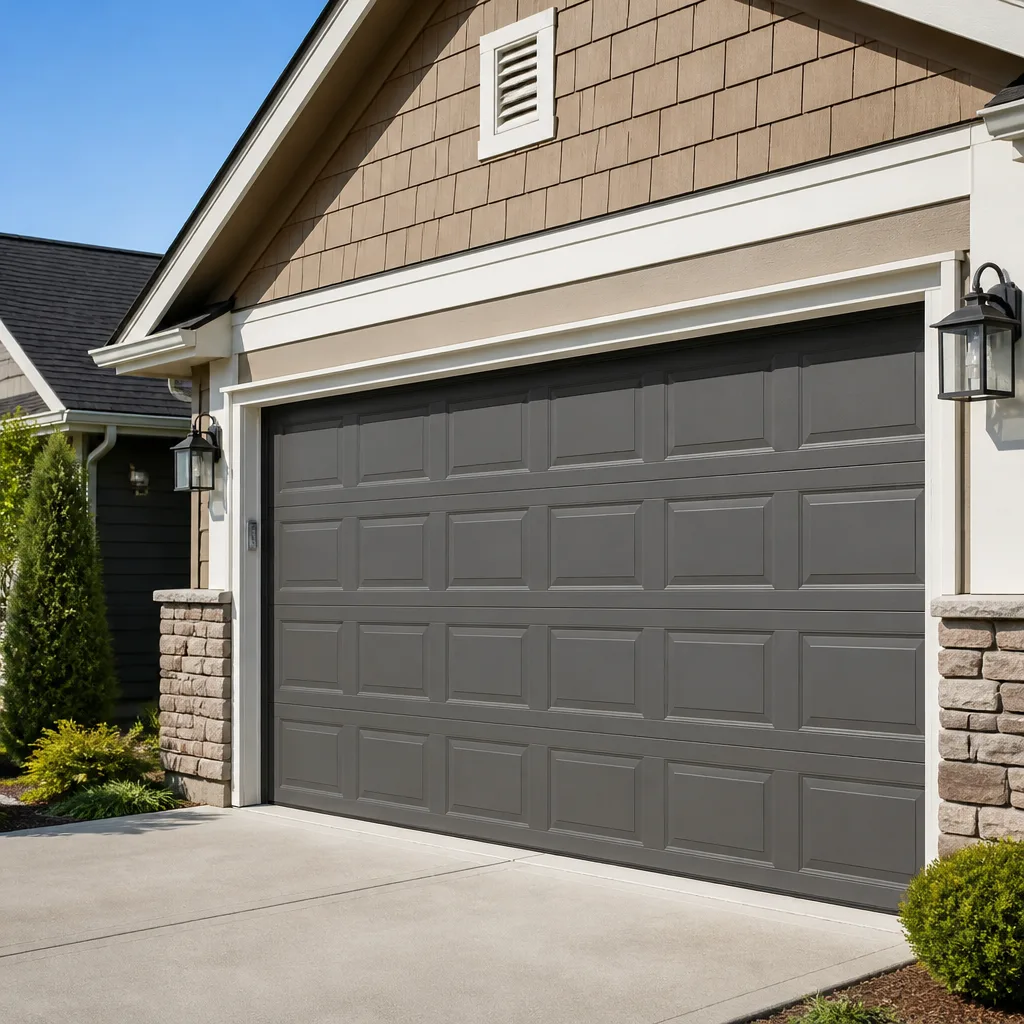 Raised-panel steel
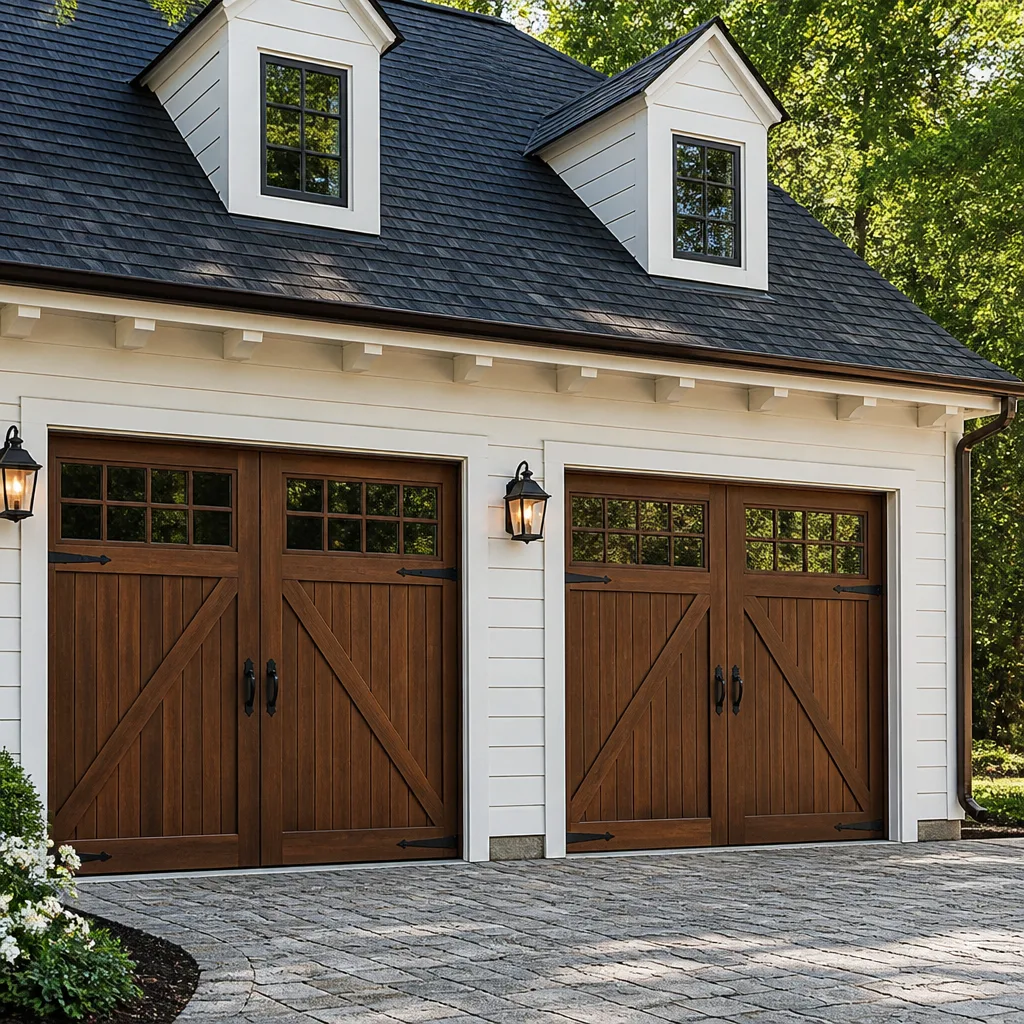 Carriage house
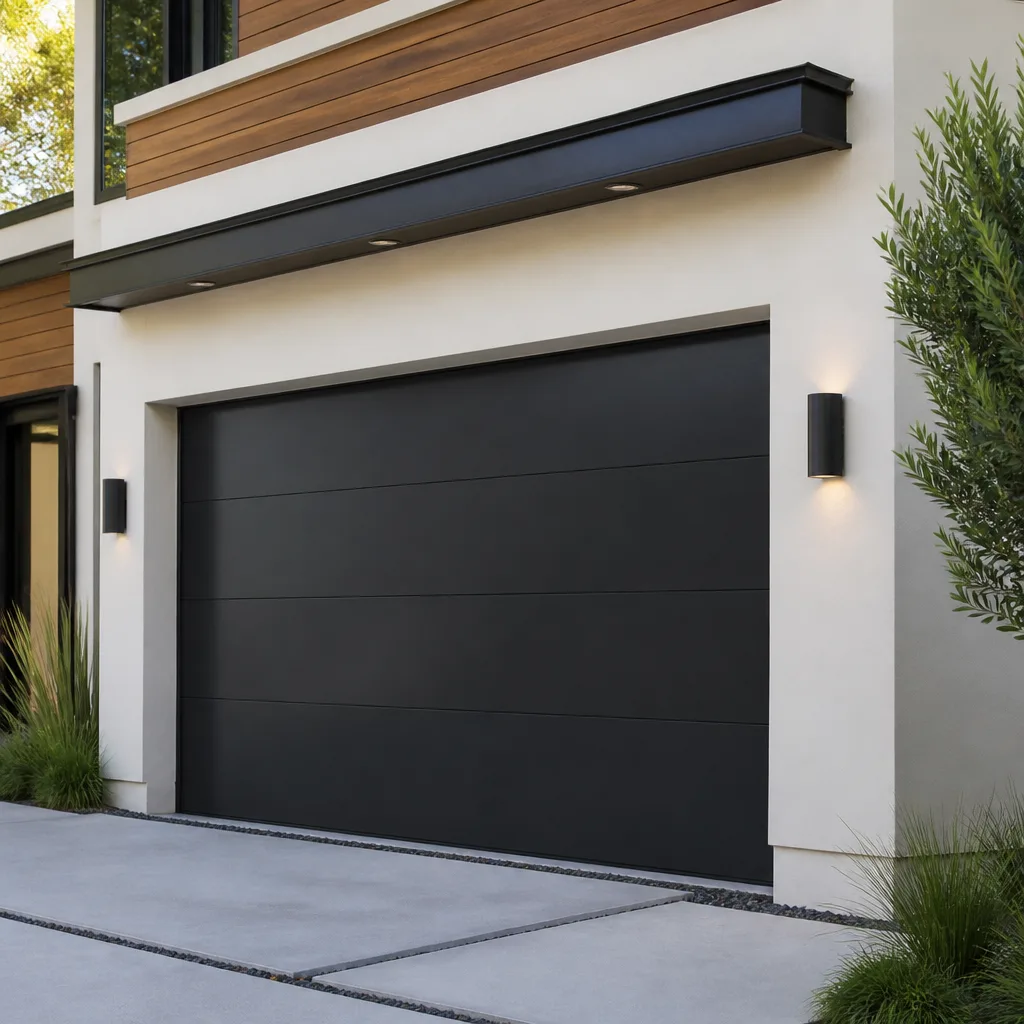 Modern flush
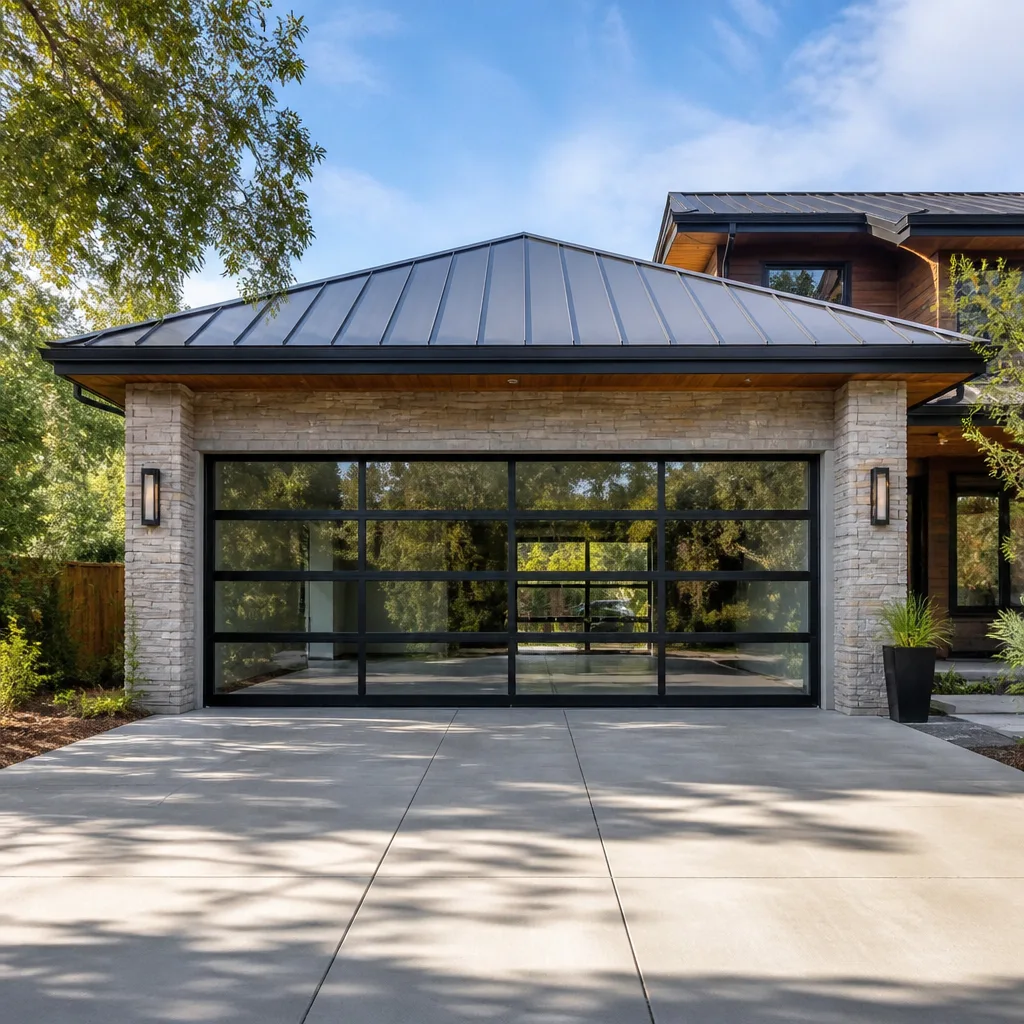 Full-view glass
 LiftMaster openers
 Chamberlain openers
Full 25-point door and opener safety check with every visit - springs, cables, rollers, tracks, and your LiftMaster or Chamberlain opener included
You get a price before we start. It does not change when the pro arrives.
Get your free estimateGarage Door Emergency Preparedness Guide for Lehigh Acres Homes
Most garage door advice treats every failure the same. In Lehigh Acres, it isn’t. A snapped torsion spring and a hurricane bearing down are two different emergencies, and the plan that gets you through one won’t get you through the other. Homeowners here tend to prep for storms and forget the mechanics, or fix the mechanics and never think about the storm. This guide splits the two tracks apart and gives you a real plan for each: what to do before a named storm, what to do in the first ten minutes after a failure, how to run the door by hand when the power is out, and what you can safely check yourself after the weather clears. We cover Lehigh Acres specifically because the weather here writes half of these scenarios for you.
Quick Answer
A garage door emergency in Lehigh Acres comes from two sources: a mechanical failure (spring, cable, track, or opener) or a severe weather event that can compromise the door as a barrier. Prepare separately for each. Before a storm, lock the door manually and brace it if you can. After a mechanical failure, stop using the door, don’t force it, and call a specialist. Knowing which track you’re on – and having the right steps ready – is the entire point of this guide.
Styles & brands we work with
- Raised-panel steel
- Carriage house
- Modern flush
- Full-view glass
- LiftMaster openers
- Chamberlain openers
Table of Contents
- Why Lehigh Acres Faces Two Kinds of Garage Door Emergencies
- Pre-Storm Protocol: Securing Your Garage Door Before a Named Storm
- The First 10 Minutes After a Spring Snap, Cable Break, or Door Off-Track
- Operating Your Garage Door Manually During a Power Outage
- Emergency Contact Preparation: What to Have Ready Before You Call
- Post-Storm Damage Assessment: What You Can Check and What You Can’t
- Preventing the Next Emergency: A Year-Round Checklist
- When to Call a Professional
Why Lehigh Acres Faces Two Kinds of Garage Door Emergencies
Lehigh Acres sits in a part of Florida where the wind events are real and the humidity never really leaves. That combination means your garage door is exposed to two pressures at once: the mechanical wear of daily use in a warm, humid climate, and the occasional demand that it act as a structural barrier against high wind. Most homeowners prep for one and ignore the other. That’s the gap this guide closes.
The mechanical track is the everyday one. Springs fatigue, cables fray, rollers wear, openers strain. These failures happen on ordinary afternoons and at inconvenient hours, and they’re the reason a door suddenly won’t move when you’re trying to leave for work. The storm track is the seasonal one. When a named storm is forecast, your garage door becomes one of the largest openings in your home, and how well it’s secured matters.
Here’s the point most preparedness advice misses: these two tracks can collide. A spring can snap the night before a storm. An opener can quit while you’re trying to close the door ahead of landfall. When that happens, you’re not managing one emergency, you’re managing two at once, and the order in which you handle them matters.
We’ve worked on garage doors across Lehigh Acres long enough to know the local pattern. Doors here take a beating from humidity and heat, and the homes are spread across a large area, so getting a technician to you quickly requires a clear address and a clear description of the problem. The rest of this guide gives you both.
Pre-Storm Protocol: Securing Your Garage Door Before a Named Storm
When a named storm is forecast for the Lehigh Acres area, your garage door needs to be locked down and, if possible, braced before the wind arrives. The goal is to keep the door from being pushed in, pulled out, or forced off its tracks by pressure. Do this early, not the hour before landfall, because once the wind picks up you shouldn’t be outside working on the door.
Work through this sequence:
- Disconnect the opener and lock the door manually. Most openers have a manual release cord. Pull it to disengage the carriage, then slide the door’s manual lock bar (if your door has one) or use the deadbolt-style slide lock on the track. This keeps the door from being cycled by a power surge or a failing opener during the storm.
- Check the door’s balance by hand. With the opener disengaged, lift the door halfway. It should stay put. If it drifts down on its own, the springs are weak and the door won’t hold its position under load – that’s a call-before-the-storm situation.
- Inspect the tracks and rollers. Look for bent track, loose brackets, or rollers that have jumped the rail. A door that’s already off-track before the wind hits is a liability.
- Brace the door if your home has a bracing system or you’ve added one. Vertical or horizontal reinforcement designed for your door model distributes wind load. If you don’t have bracing, a professional can advise on what fits your specific door – Clopay and Amarr both publish wind-load guidance for their models.
- Clear the area in front of and behind the door. Anything that can become airborne and strike the door – loose patio furniture, trash cans, garden tools – should be secured or moved inside.
If your door is already showing signs of trouble before a storm – a slack cable, a door that shudders on the way up, a spring that looks worn – call for garage door repair before the weather arrives. A door that fails during a storm is far harder to deal with than one that fails on a calm day.
The First 10 Minutes After a Spring Snap, Cable Break, or Door Off-Track
The first thing to do after any of these failures is stop. Don’t cycle the door again to “see if it works.” Don’t try to force it up or down by hand. A snapped torsion spring or a broken cable means the door is being held by whatever’s left of the counterbalance system, and that’s not a safe state to work around. Here’s how to handle the first ten minutes.
For all three failures:
- Keep everyone clear of the door. Move kids, pets, and cars out of the door’s path. A door with a failed spring or cable can come down hard and fast.
- Don’t touch the springs or cables. These components are under high tension. Even a “loose” cable can snap back with force. This is the one part of garage door work that’s genuinely dangerous to DIY.
- Disengage the opener if the door is stuck open or closed. Pull the manual release only if the door is in a stable position. If the door is hanging or jammed, leave it and call.
- Note what you saw and heard. A loud bang, a door that dropped suddenly, a cable that’s now lying slack on the side – these details help a technician diagnose before arriving.
For a door off-track: don’t try to lift it back onto the track by hand. A door that’s jumped the rail is unstable, and the rollers can be under load. Secure the area and call. For a spring snap: the door will feel extremely heavy if you try to lift it, and that’s your confirmation to stop. For a cable break: you’ll usually see a frayed or dangling cable on one side, and the door may hang unevenly.
In our experience, the homeowners who get the fastest resolution are the ones who call right away and describe exactly what failed. If you need garage door spring repair, say so when you call. That tells us to send a technician equipped for high-tension spring work, not a generalist.
Operating Your Garage Door Manually During a Power Outage
When the power goes out – which happens in Lehigh Acres during storm season – your garage door won’t respond to the opener. You can still operate it by hand, but only if you do it correctly. The manual release is your tool here, and using it safely means understanding what the door will do once it’s disengaged.
Follow these steps:
- Locate the manual release cord. It hangs from the opener carriage, usually red-handled, near where the door meets the rail.
- Pull the cord straight down to disengage the carriage from the drive mechanism. You’ll hear or feel it release.
- Lift the door slowly by hand. A properly balanced door will lift with reasonable effort. If it feels extremely heavy, the springs may be weak – stop and don’t force it.
- Prop the door open if you need to move a car in or out. Use a sturdy brace and never leave the door unattended while it’s manually held open.
- When power returns, re-engage the carriage by cycling the opener or following the release instructions for Genie and Wayne Dalton and other common openers.
One caution: a door that’s been left in the manual release position for a while can drift or drop if the springs are worn. If the door won’t stay up on its own, that’s a spring issue, not a power issue. Call for help rather than propping it and hoping. And if the door is already off-track or has a broken cable, don’t attempt manual operation at all.
Emergency Contact Preparation: What to Have Ready Before You Call
When a garage door fails, the last thing you want to do is search for information while a door hangs over your car or a storm is closing in. The homeowners who get the quickest help are the ones who’ve already gathered a few basics. Here’s what to have ready before you dial.
Prepare a short emergency card – on your phone or on paper – with:
- Your door’s brand and model if you know it. Being able to say “it’s a Clopay” or “it’s a LiftMaster opener” lets the technician match the right parts and approach. We work on eight major brands – LiftMaster, Chamberlain, Genie, Clopay, Amarr, Wayne Dalton, Craftsman, and Raynor – so the make and model helps us send the right fit.
- What failed. Was it a loud bang? A door that won’t move? A cable hanging loose? A door that’s crooked in the track? Plain language is fine.
- Whether the door is open, closed, or stuck partway. This changes what’s safe to do next.
- The door’s approximate size and whether it’s a single or double door.
- Your address and any gate or access instructions. Lehigh Acres is a large, spread-out community, and clear directions save time.
Also decide in advance whether the car is trapped inside or outside the garage. That’s the difference between an inconvenience and an urgent call, and it’s the first question a dispatcher asks. Call (877) 492-2397. We answer 24/7. Fast dispatch from 7am to 7pm, Sunday through Friday. A call outside dispatch hours is booked into the next opening, Sunday through Friday, 7am to 7pm.
For non-urgent opener issues – a remote that won’t sync, a keypad that’s stopped working – that’s a separate problem from a door emergency. Our garage door opener repair page covers those, and they can usually be scheduled rather than rushed.
Post-Storm Damage Assessment: What You Can Check and What You Can’t
After a storm passes through Lehigh Acres, your first instinct may be to open the garage and check things over. Pause first. A garage door that’s been through high wind may look fine and still be unsafe to operate. Here’s how to separate what you can safely inspect from what needs a professional before the door is used again.
What a homeowner can safely do:
- Look at the door from a distance. Is it visibly bent, warped, or sitting crooked in the frame?
- Check whether the door is flush with the opening or has gaps along the sides or top.
- Look at the tracks for obvious bends, dents, or separation from the wall.
- Check the ground and the area around the door for debris that could interfere.
- See whether the door is still locked and whether the manual release is intact.
What requires a professional before you use the door:
- Any sign the springs or cables have been disturbed, stretched, or broken. These are high-tension parts and a storm can load them unpredictably.
- A door that’s off-track, crooked, or that you can’t fully open or close by hand.
- Bent panels, especially on a Clopay or Amarr door where the panel may need to be replaced as a unit rather than straightened.
- A door that won’t stay up when you lift it by hand (a sign of spring damage).
- Any noise or shudder when you test the opener.
If you’re unsure, don’t operate the door. A damaged door can fall, and a door that’s forced can turn a repair into a full replacement. Call a specialist to assess it before anyone uses the garage.
Preventing the Next Emergency: A Year-Round Checklist
Most garage door emergencies give warning signs first. The trouble is that homeowners don’t know what to look for, or they ignore the signs until the door fails at the worst moment. In Lehigh Acres, where doors contend with heat, humidity, and storm season, a little routine attention goes a long way.
Set a reminder to run through this once a season:
- Test the door’s balance. Disengage the opener and lift the door halfway. It should hold. If it drifts, the springs are weakening.
- Listen to the door. Grinding, squealing, or a rhythmic thumping means worn rollers or a dry or failing spring.
- Look at the springs and cables. A stretched spring, a frayed cable, or a gap where a spring should be tight is a warning. Don’t touch – just call.
- Check the tracks for debris and bends. Small bends become big ones, and debris accelerates wear.
- Test the safety reverse. Put a small object in the door’s path and see if the door reverses on contact. If it doesn’t, that’s a safety problem.
- Before storm season, review your pre-storm protocol from the earlier section. Spring is a good time to make sure your lock, release cord, and bracing (if any) are all in working order.
If your door is older or you’re not sure of its history, a professional inspection can catch the issues you can’t see. Our Lehigh Acres garage door repair pros handle everything from a single adjustment to a full new installation, so a door that’s nearing the end of its life doesn’t surprise you mid-storm.
Common Mistakes to Avoid
- Forcing a door that’s stuck. Lifting or pushing a jammed door can bend panels, snap a weakened cable, or bring the door down. It can also break the opener’s carriage. If it won’t move, stop.
- Trying to fix a torsion spring yourself. This is the single most dangerous part of any garage door. Springs are under high tension and can cause serious injury. Leave spring work to a trained technician.
- Ignoring the warning signs before storm season. A door that shudders, a spring that looks stretched, or a cable that’s frayed is a warning. Lehigh Acres storms don’t give you time to fix it once the wind is up.
- Leaving the manual release engaged by accident. After a power outage, many homeowners forget to re-engage the carriage. The opener will run but the door won’t move – and the door could drift.
- Running the door with debris in the tracks. Small stones, leaves, or grit cause rollers to wear and tracks to bend. Check and clear the tracks regularly.
- Assuming a post-storm door is fine because it looks fine. Hidden spring and cable damage doesn’t show on the surface. Have the door inspected before putting it back into daily use.
- Calling a general handyman for a specialist job. Spring, cable, and track work requires specific training and tooling. A generalist may decline the job or patch it in a way that fails again. Use a garage-door-only specialist.
See the difference
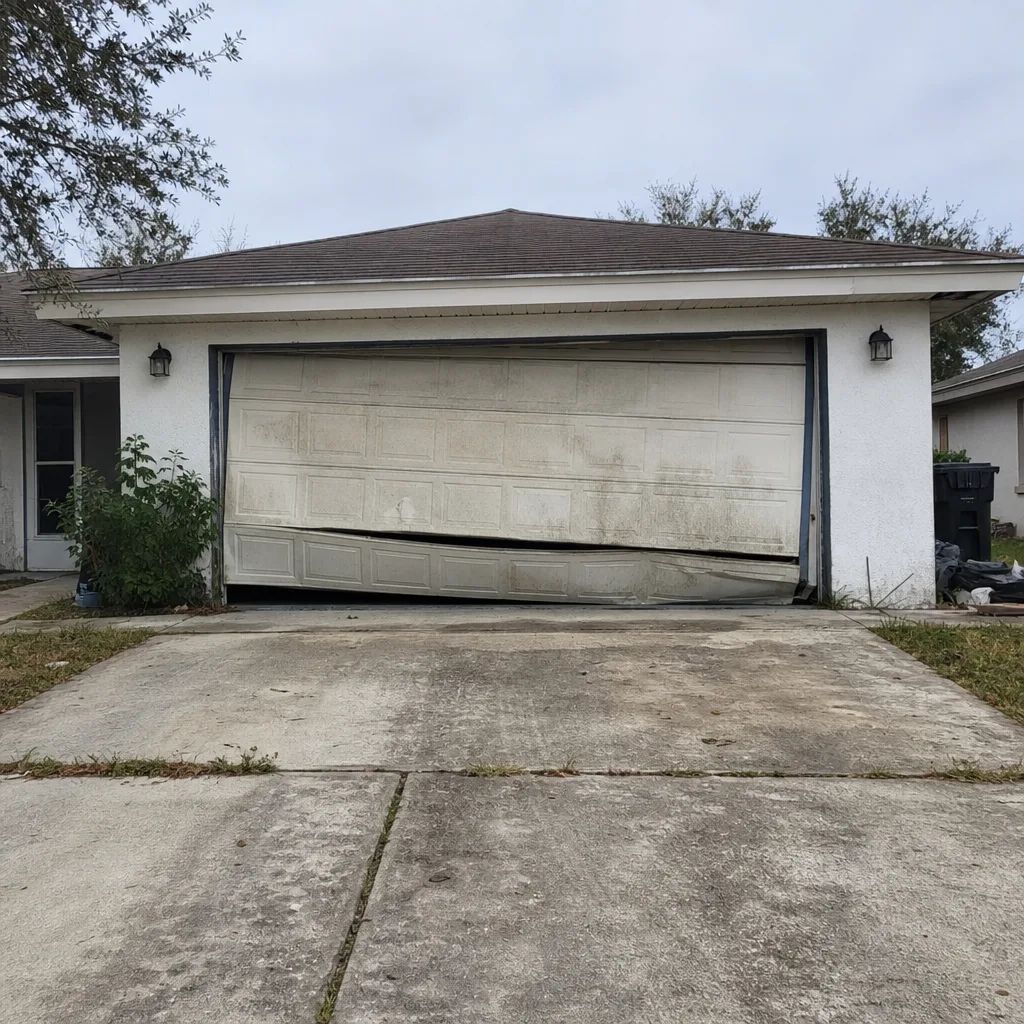 Before
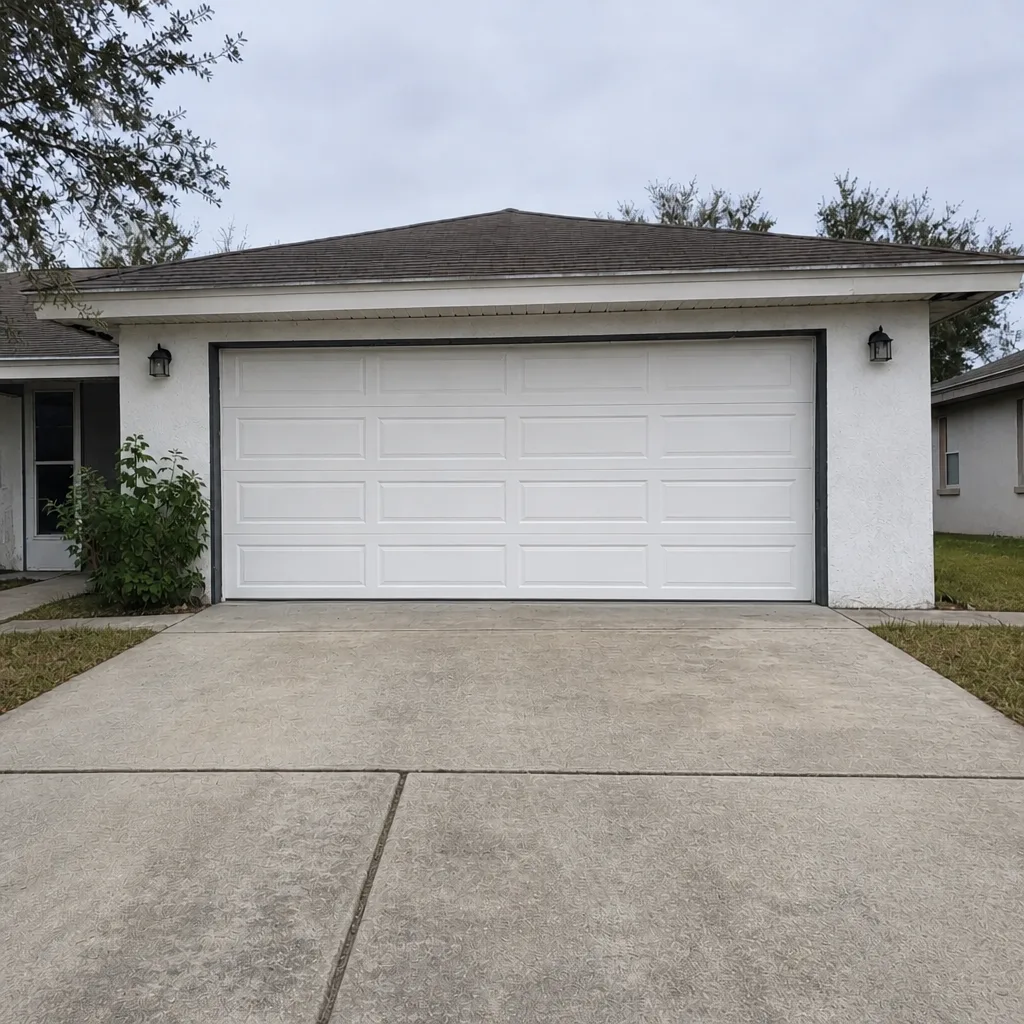 After
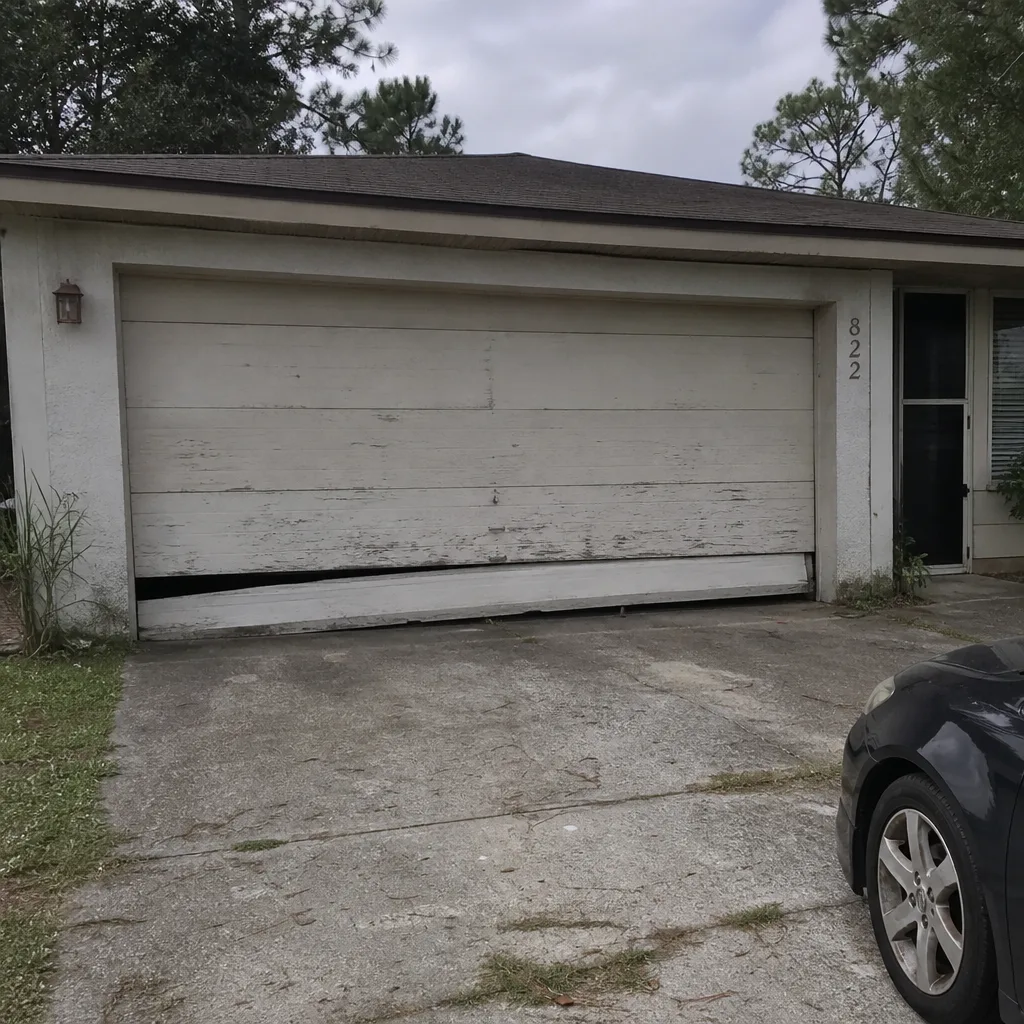 Before
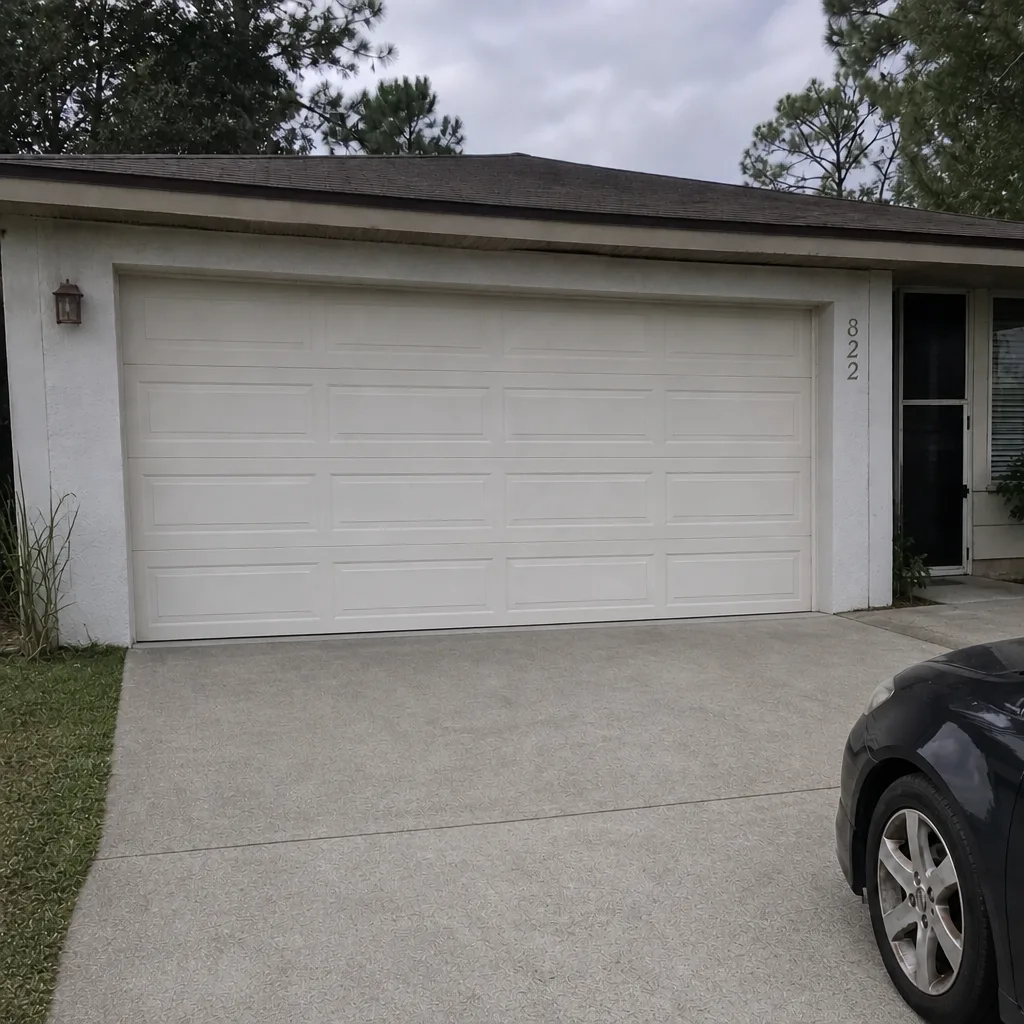 After
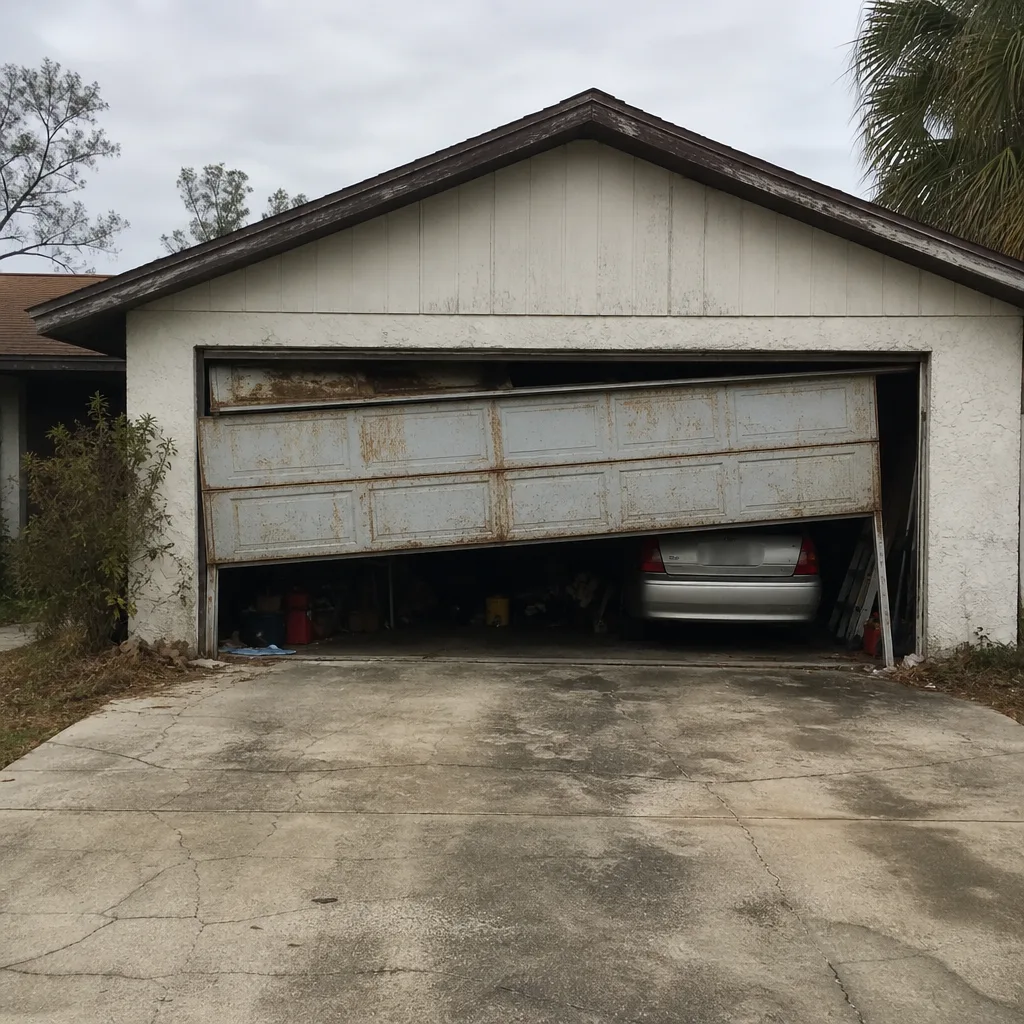 Before
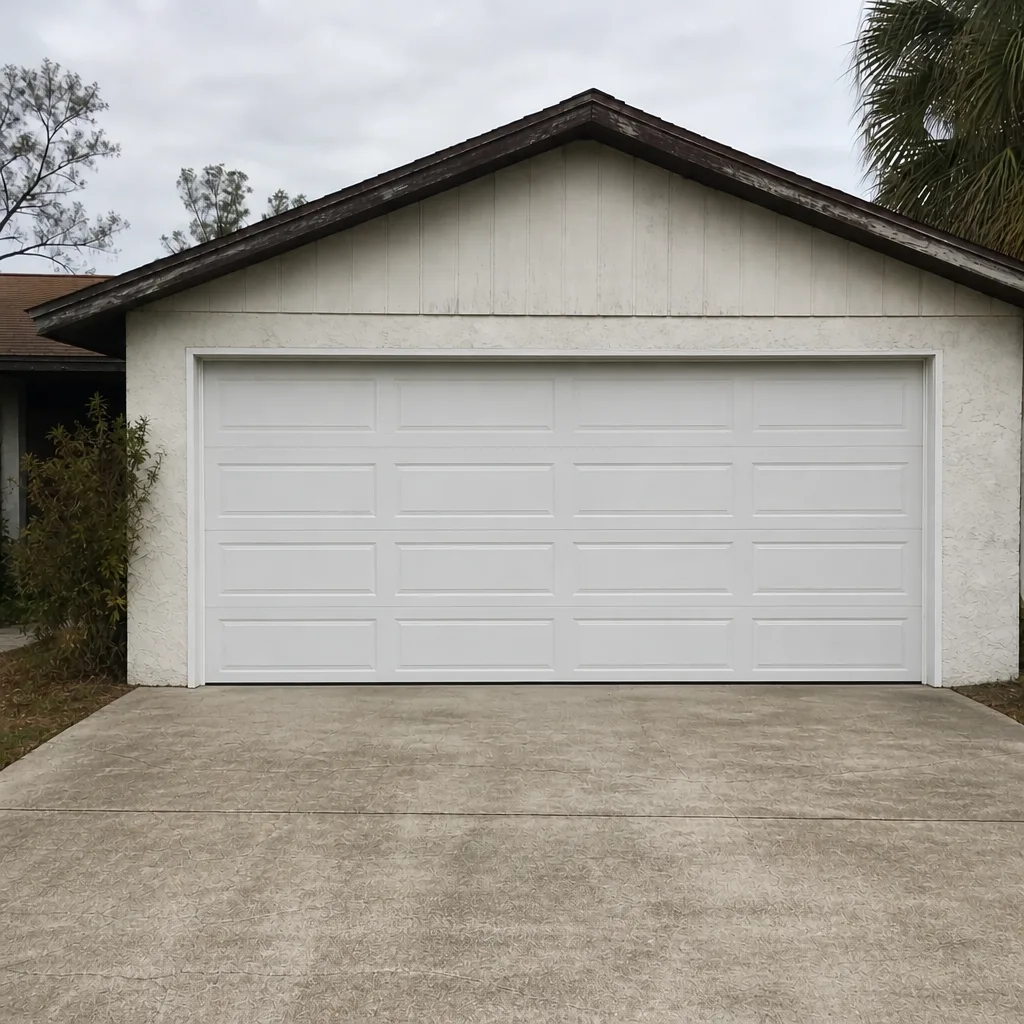 After
When to Call a Professional
You should call a professional any time the door’s springs or cables are involved, when a door is off-track or crooked, when a door won’t stay up on its own, or when post-storm damage means it’s unsafe to use. Those are the situations where a trained technician keeps you and your home safe. For a stuck car or a door that won’t close ahead of a storm, that’s a call worth making early rather than late. Our technicians have up to 15 years of experience, and we work on systems from eight major brands from Genie and Clopay to Wayne Dalton and Amarr, so we can diagnose the exact system rather than guess. Lehigh Acres Garage Door Repair Pros offers free estimates in Lehigh Acres – call (877) 492-2397.
Frequently Asked Questions
Stop using the door and keep everyone clear. Don’t try to lift it, and don’t touch the spring or cables – they’re under high tension and dangerous. Call a specialist right away and describe what happened. If the car is trapped inside or outside, say so, because that changes the urgency. Call (877) 492-2397 for an exact quote – estimates are free.
Yes, same-day service is available for garage door emergencies. Our phones are answered 24/7, and we dispatch from 7am to 7pm, Sunday through Friday. A call outside those hours is booked into the next opening. The price is set per job by a written estimate before any work starts. Call (877) 492-2397 to get on the schedule.
Disengage the opener, lock the door manually, and brace it if your door model supports bracing. Check the tracks and rollers, and clear anything in front of the door that could become airborne. Do this early, before the wind arrives. If the door is already showing damage, call for repair before the storm. Call (877) 492-2397 for a free estimate.
It depends on whether it’s one spring or a matched pair, the door size, and the spring type. A torsion spring repair for a single spring is typically in a modest range, and a matched pair is usually replaced together, so it costs about twice a single spring. We give you a written estimate before any work starts, and that’s the price. Call (877) 492-2397 for an exact quote – estimates are free.
No. The written estimate we give you before work starts is the price. If we find something additional that needs doing, we tell you and get your agreement before touching it. You won’t get an invoice bigger than the quote. Call (877) 492-2397 to set up a free estimate.
Yes. The local professionals we connect you with are licensed and insured as their state requires. Our technicians have up to 15 years of experience and work specifically on garage doors, including spring, cable, track, and opener work. Call (877) 492-2397 to ask about your specific door.
The Bottom Line
A garage door emergency in Lehigh Acres comes from two places: a mechanical failure or a storm. Prepare for them separately. Before a storm, lock and brace the door, check the springs and tracks, and clear the area. After a failure, stop, keep everyone clear, don’t touch the springs or cables, and call. Know how to use your manual release during a power outage and re-engage it after. Keep your door’s make and model ready, decide in advance whether the car is trapped, and have our number handy. And after any storm, inspect from a distance – if the door is bent, off-track, or won’t stay up, don’t use it. A little preparation now is what keeps a small problem from becoming a dangerous one. Call (877) 492-2397 for a free estimate.
Written by the team at Lehigh Acres Garage Door Repair Pros.